Français
 Español
 Deutsch
 Nederlands

 CBD
 CBN
 HEADSHOP
 Adaptogenic mushrooms

Instagram and TikTok for a CBD shop: what is allowed in 2026
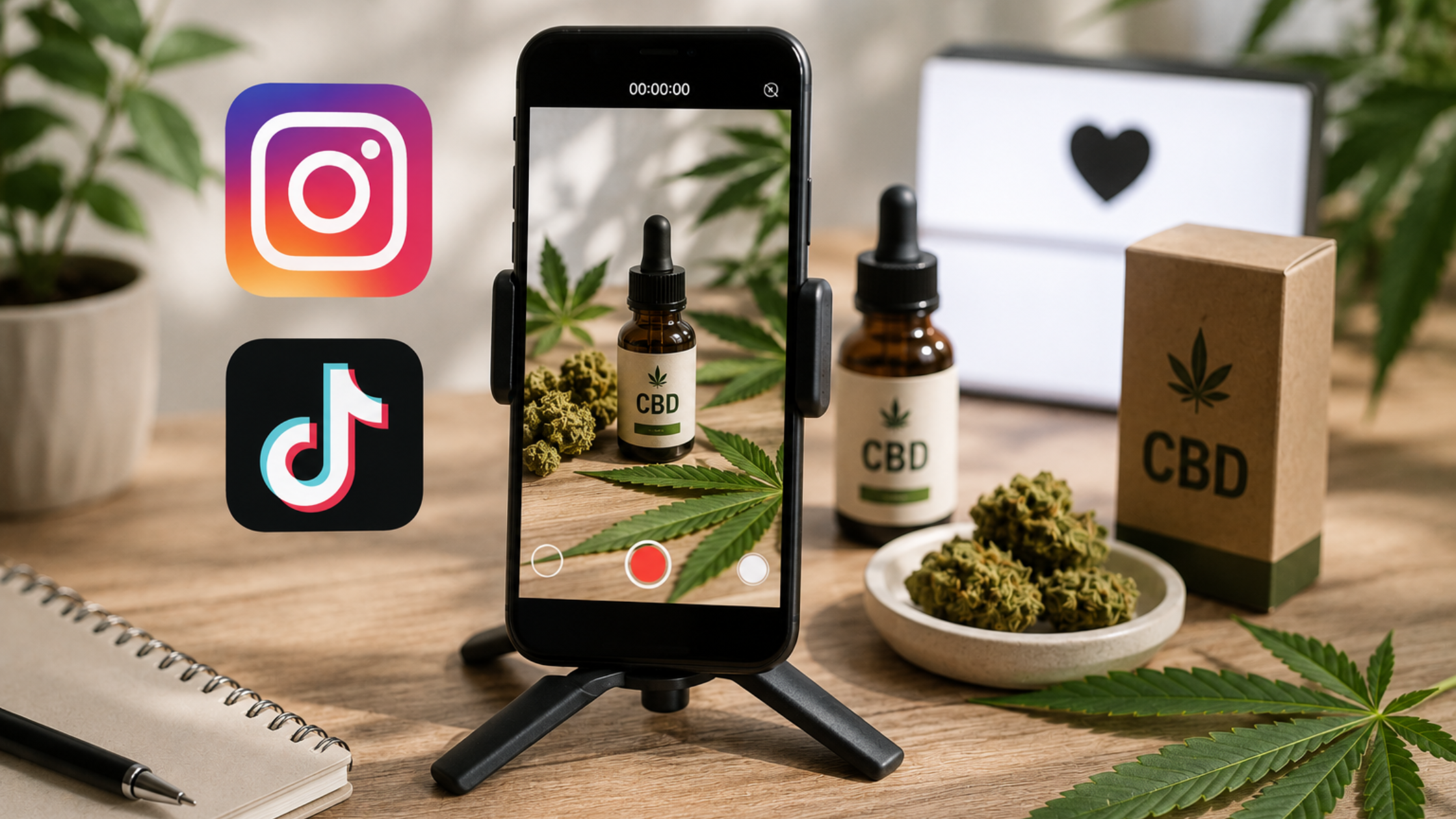
On Instagram and TikTok, a CBD shop can post organic content but cannot pay to advertise its CBD products. Both platforms apply strict rules to hemp-related content, and a retailer who ignores them risks deleted posts, a restricted account or an outright ban. Here is what you can do, what to avoid and how to build a presence without taking risks, based on the platforms' policies as they stood when this article was written in May 2026.
If you are building a range to show off online, start with our trade CBD range.
Paid CBD advertising on Instagram and TikTok: what is banned
Both platforms have clear policies on this point:
- Instagram / Meta: paid advertising for CBD products is not allowed. No sponsored campaign and no boosted post linked to selling CBD; trying it puts your ad account at risk of being banned.
- TikTok: paid CBD advertising is blocked as well. The platform puts CBD products in its high-risk categories and prohibits branded content with a direct commercial aim for these products.
Paid CBD advertising on these platforms is off the table. Your whole strategy therefore rests on organic content, which does not mean it cannot deliver results.
What you can do: organic CBD content
Organic, unsponsored content remains the main social media lever for a CBD shop. Done well, it builds visibility and credibility and sends people to your website or your shop.
Formats that work for a CBD shop:
- Product showcases: CBD flowers, resins and oils shown at their best, with packaging and appearance in focus and aromas described in sober terms.
- Behind the scenes: deliveries arriving, shelves being stocked, new products unpacked. This kind of content puts a human face on your business and gets people engaging.
- Informative posts: indoor versus outdoor versus greenhouse, how to read a COA, what live resin is. Posts that add value without making claims.
- Lives and Q&A sessions: going live brings you closer to your community and creates natural peaks in visibility.
What to keep out of your posts
- Any claim about effects on the body or on health.
- Wording that could be read as marketing a psychoactive substance.
- Visuals or phrasing that blur the line with recreational cannabis.
- Direct calls to buy in an advertising context.
Flower photographs well, which makes our CBD flower catalogue a natural source of material for product posts. Before you feature any product, check that you can sell it where you trade: our flowers comply with French law (delta-9-THC ≤ 0.3%), but hemp rules vary from country to country and can be stricter, and in the UK the status of hemp flower remains contested.
Working with content creators: the French rules in 2026
In France, a law of 9 June 2023 on commercial influence (law no. 2023-451) requires every paid collaboration with a content creator to be clearly identified. For a CBD shop operating in France, that means:
- a visible "Advertising" or "Commercial collaboration" label from the very start of the content;
- using the platforms' own tools (the "Paid partnership" label on Instagram, the "Ad" disclosure on TikTok);
- content that respects the CBD rules: no claims, no focus on effects.
In France, breaking these rules can lead to criminal penalties for misleading commercial practices, whatever the product. Other countries have their own disclosure requirements, so a shop outside France should check the local rules before signing a creator.
Which social media strategy for a CBD shop in 2026?
- Post regularly: three or four posts a week are enough to keep your account active and give the algorithm something to work with.
- Take care over visuals: CBD products are photogenic. Good packaging, good light and a consistent look build a professional image.
- Choose hashtags carefully: avoid tags that are too generic or tied to recreational cannabis. Prefer tags about hemp, your shop and your town.
- Back it up with SEO: social media builds awareness, but search engine optimisation brings lasting, qualified traffic. The two work together.
The key points:
- paid CBD advertising was not allowed on Instagram or TikTok as of May 2026;
- organic content remains the main lever, and it can be very effective when it is well structured;
- in France, any collaboration with a content creator must follow the 2023 influencer law;
- no claim about product effects should appear in anything you publish.
Already a Deli Hemp customer? Log in to your trade account to reorder the products you feature online.
Frequently asked questions
Can a CBD shop run paid ads on Instagram?
No. When this article was written, Meta did not allow paid advertising or boosted posts for CBD products, and attempting it could get the ad account banned. Organic posts about your shop and products are where to put your effort.
Is organic CBD content allowed on TikTok?
Organic content is the route open to CBD shops, as long as it avoids claims about effects and anything resembling recreational cannabis marketing. Paid ads and branded content with a direct sales aim for CBD products are blocked.
Do paid influencer posts for CBD need a label?
In France, yes: the 2023 influencer law requires a clear "Advertising" or "Commercial collaboration" label and the platform's own paid-partnership tag. Outside France, check the disclosure rules that apply in your country.