Français
 Español
 Deutsch
 Nederlands

 CBD
 CBN
 HEADSHOP
 Adaptogenic mushrooms

CBD pollen vs CBD resin: what retailers need to know before stocking up
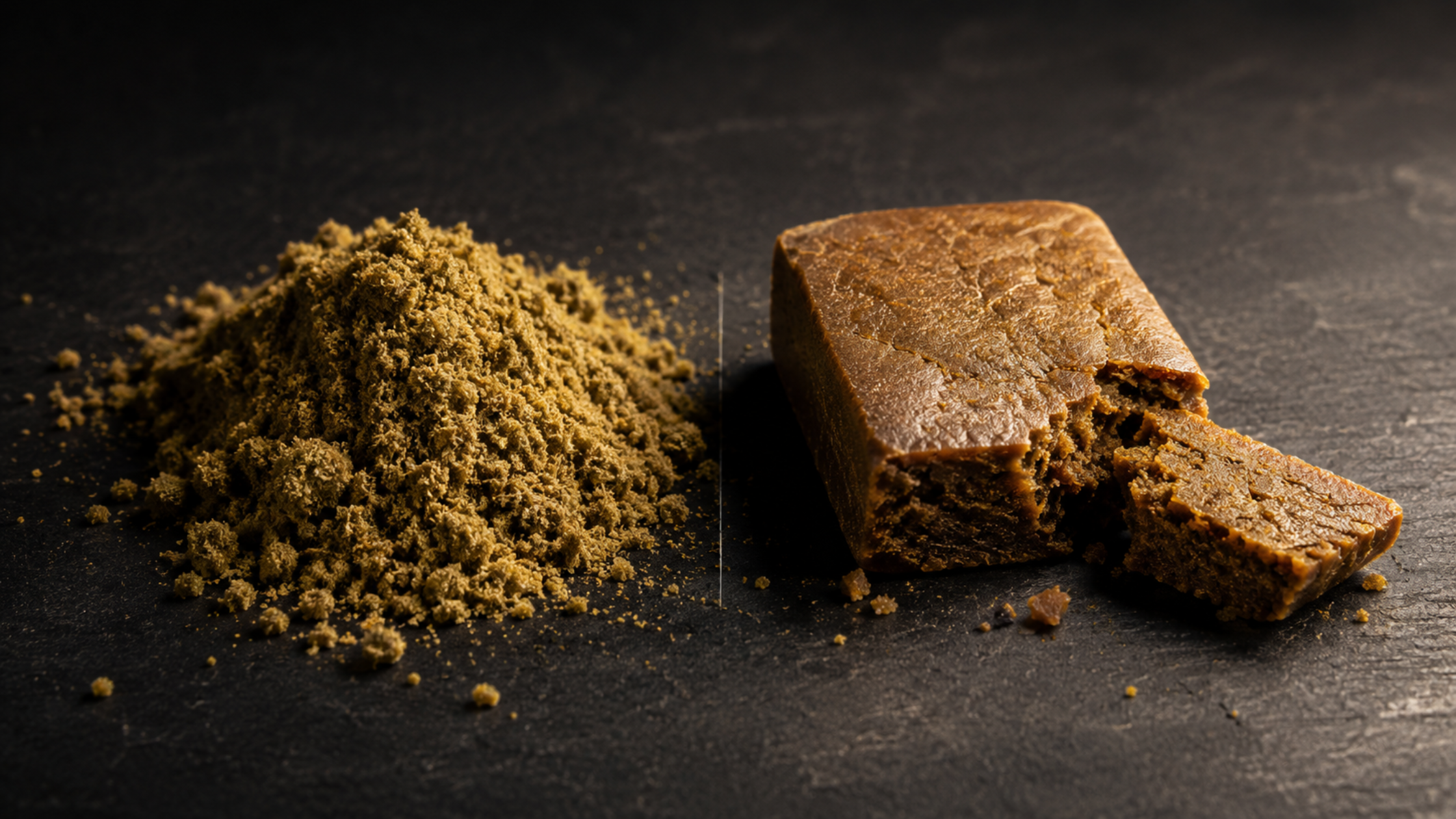
CBD pollen and CBD resin are not the same product, even though many retailers use the two words as if they were. Both come from the trichomes of the hemp flower. Pollen is simply sifted, while resin goes through an extra step of pressing or extraction. Knowing the difference helps you buy better, advise customers properly and build a concentrates shelf that actually sells.
Any serious wholesale catalogue lists both. Yet plenty of shop owners, tobacconists and online sellers have no clear picture of what separates them, and that shows in their sourcing, in the advice they give and in the shape of their range.
See our wholesale CBD pollen and resin for trade buyers
Same starting point, two very different products
It all starts with the trichomes
Whether you are buying pollen or resin, both are made from trichomes, the tiny resin glands that cover hemp flowers and hold most of the cannabinoids and terpenes. That is what they share. What sets them apart is everything that happens once the trichomes have been collected.
CBD pollen, also called kief or dry sift, is made by dry-sifting dried hemp flowers. The flowers are passed through screens of different micron sizes to separate the trichomes from the rest of the plant material. The result is a fine, light powder, golden or khaki-green depending on the strain, made without any pressure or heat. It is the least processed of all hemp concentrates, and its appeal lies in that simplicity.
CBD resin goes one step further. The sifted pollen is pressed, heated or worked using other techniques, such as cold pressing, ice-o-lator or micron filtration, to produce a compact, dense block. Depending on the method, its texture ranges from soft and oily to crumbly. It is a processed concentrate, usually with a higher cannabinoid content than raw pollen.
The practical differences every retailer should know
Texture and handling in store
In a specialist shop, texture shapes the customer's experience. Pollen is a fine, airy powder, slightly sticky to the touch, and it is not portioned the way a pressed resin is. Resin comes as a block or slab, softer or firmer depending on whether it is creamy, oily, sandy or compact, and it handles differently. If you train staff, this is the first distinction to get right: presenting each format correctly avoids returns and disappointed customers.
Cannabinoid content
Wholesale CBD pollen typically contains 15 to 40% CBD. Depending on the method used (simple filtration, triple filtration, ice-o-lator, cold pressing), CBD resin can range from 25 to 80%. That has a direct commercial consequence. Pollen is often positioned as an accessible, natural entry point, while high-strength resins are aimed at experienced customers looking for a top-end concentrate.
Aroma
This is where retailers who know their products make the difference. Pollen, sifted without heat or pressure, keeps the full terpene profile of the original flower, so its aromas are often finer and more floral. Pressed resin develops different aromas according to the process: earthier and deeper in a heat-pressed hash, cleaner and more complex in an ice-o-lator or a fine filtration. Being able to explain this to customers helps you sell more and keep them coming back.
Pollen or resin: what belongs on your concentrates shelf?
Building a balanced range
Choosing between pollen and resin is not an either-or decision. They are two complementary segments that serve different customers, and a well-stocked concentrates shelf should ideally carry both.
To cover the main customer profiles, aim for:
- one or two accessible entry-level pollens with gentle aromas, for new customers
- a soft or Moroccan-style resin for customers who want an affordable classic
- a high-strength resin (ice-o-lator, triple filtered or frozen) for demanding connoisseurs
- one or two 0% THC pollens or resins for customers concerned about roadside drug tests
- other cannabinoids, such as CBG pollen or CBN resin, for customers who want to go beyond CBD
What sells best in which kind of shop
In a shop with beginners or a mixed clientele, pollen is often the best way into concentrates. Its natural look, recognisable texture and accessible price lower the barrier to a first purchase. In a shop positioned on premium products or experienced customers, high-strength resins such as 90-micron filtrations, ice-o-lator, piattella or frozen are the references that set you apart and justify a higher retail price.
Browse our full range of CBD pollen and resin for retailers
What to check before buying CBD pollen or resin in bulk
Lab reports, traceability and origin
The paperwork is the same for both formats. Every batch should come with a certificate of analysis from an independent accredited laboratory (in France, accreditation is granted by COFRAC), giving the exact CBD, THC and other cannabinoid content. Traceability must be complete: hemp origin, variety, production method and batch number. Without these documents, your shop is exposed in an inspection, whether by consumer protection officers or customs.
Our pollens and resins comply with French law (delta-9-THC ≤ 0.3%). The status of hemp concentrates varies from country to country and can be stricter than in France. In the UK, it remains contested, so check the resale rules that apply where you trade before ordering.
Why buy your concentrates from Deli Hemp
We have supplied CBD to professionals for more than five years, and we work with Hashys, a partner laboratory in Île-de-France that makes pollens and resins in small batches. Hashys uses solvent-free methods and traceable French hemp, every order comes with batch lab reports, and our trade prices fall as volumes rise. The catalogue covers every format: bulk pollen, traditional resins, high-strength resins, 0% THC lines and other cannabinoids such as CBG, CBN and CBC.
CBD pollen vs CBD resin: key points for retailers
Understanding the difference between pollen and resin means you control your concentrates shelf, advise customers better and build a range that keeps them loyal. The two formats complement each other rather than compete.
- pollen is made by dry sifting, with no pressure or heat, and is the least processed hemp concentrate
- resin is made by pressing or further working the pollen, and usually has a higher cannabinoid content
- the two differ in aroma, texture and price positioning in store
- a well-built concentrates shelf combines both to cover all customer profiles
- batch lab reports and full traceability are non-negotiable whenever you buy pollen or resin in bulk
- we stock both formats at tiered trade prices, with 24 to 48 hour delivery within France and Chronopost shipping across Europe, charged by weight and shown in your basket
Looking to stock CBD pollen or resin? Open a Deli Hemp trade account to see our trade prices and the full range of French-made CBD concentrates.