
 Français
 Español
 Deutsch
 Nederlands

 CBD
 CBN
 HEADSHOP
 Adaptogenic mushrooms

Frozen Sift, Dry Sift, Ice-O-Lator: how CBD hash is made and which ones to stock
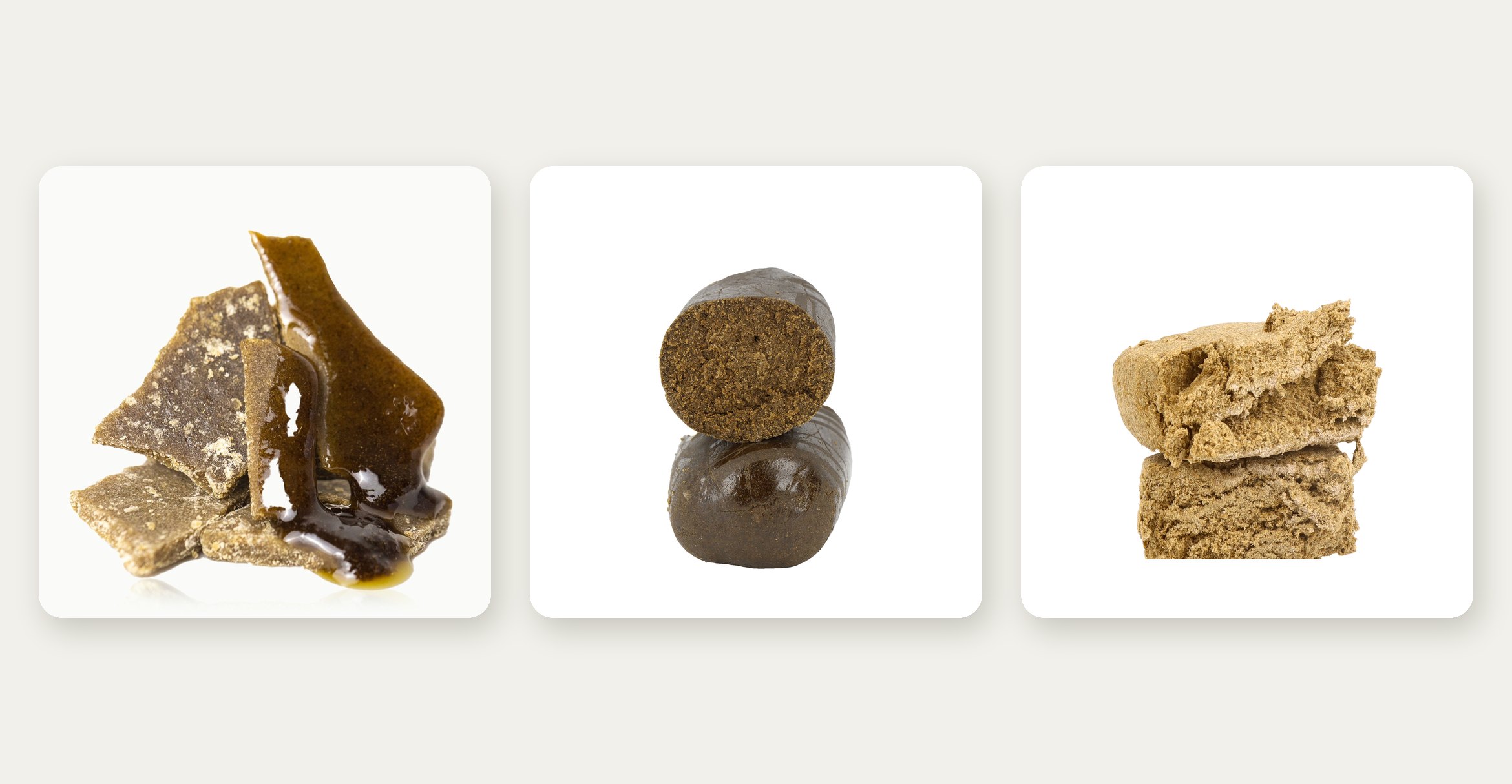
Every CBD hash starts from the same raw material: trichomes, the tiny resin glands that coat the hemp flower. What separates a Frozen Sift from an Ice-O-Lator or a pollen is how those glands are knocked off the plant and sorted. That one step decides the texture, the colour, the smell and, to a large extent, the price per gram.
Here are the six methods you will come across in trade catalogues, each with an example we hold in stock and its actual bulk price.
What is Frozen Sift?
Frozen Sift is dry sifting carried out on frozen plant material. The cold makes the trichome heads brittle, so they snap off cleanly on the screen, while leaf debris stays pliable and is less likely to fall through. You end up with a paler, cleaner and more aromatic powder than a sift done at room temperature.
On the counter, Frozen Sift is easy to recognise: blond to beige, with a sandy texture that presses together between your fingers. It is also, by a wide margin, the resin term that brings the most Google searches to our site.
We stock two versions: Frozen Sift 50% CBD at €0.60/g excl. VAT in 100 g bulk bags, and Frozen Sift 80% CBD at €0.70/g.
Dry Sift 73µ, 90µ: what do the microns mean?
The number is the mesh size of the screen, in micrometres. A trichome head measures roughly 70 to 120 µm, so a 73 µ or 90 µ screen mainly holds back those heads, the most resin-rich part of the plant, and lets fine dust and smaller plant fragments through.
Classic Dry Sift is done dry, without freezing, by shaking the material over a stack of screens. The narrower the fraction you collect (say, "between 90 and 120 µ"), the more even it is, and the lower the yield.
From our range: Zkittlez Dry Sift 90 microns, at €0.70/g excl. VAT in 100 g bulk.
Ice-O-Lator and Bubble Hash: what difference does water make?
Ice-O-Lator separates the trichomes in ice-cold water. The material is stirred with ice, the heads drop off, and the water is run through a series of filter bags with ever finer mesh. Each bag catches one fraction, which is then left to dry slowly.
The texture is grainier than Dry Sift, often a shade darker, and it softens quickly in the warmth of your hand. "Bubble Hash" covers the same family of methods, but the trade name alone doesn't guarantee the exact process, so it is worth asking your supplier.
From our range: Ice O Lator 40% CBD (€0.60/g excl. VAT) and Bubble Hash 25% CBD (€0.50/g excl. VAT).
Pollen, filtered, triple filtered: what's the difference?
"Pollen" is a trade name. It has nothing to do with the plant's reproductive pollen: it is kief, the trichome powder collected by sifting, sold loose or lightly pressed. "Filtered", "double filtered" and "triple filtered" refer to the number of passes through the screen. Each pass removes more plant debris, but the number of passes tells you nothing about the starting material. Triple filtered made from poor trim is still average.
Three products show the gap between these labels:
- La Mousse 20% CBD, made by Hashys near Paris: airy texture, €0.35/g excl. VAT in bulk.
- Filtered Pollen 50% CBD: fine, pale powder, €0.45/g.
- Triple Filtered: more compact, €0.60/g.
And Moroccan-style pressed hash?
Pressed hash starts as sifted powder, compacted with heat and pressure into a slab or a bar. It is the traditional look that hash buyers recognise straight away: brown, firm, and easy to work once slightly warmed.
The name Double Zéro comes from the Moroccan sift grading, where "00" means the finest powder. It sells at €0.45/g excl. VAT in bulk, and the Moroccan 30% CBD at €0.50/g. Both come out of the Hashys workshop.
Comparison table: method, texture and price per gram
Prices per gram excl. VAT, checked on 22 October 2026, 100 g bulk format. The top price tier applies from 100 units of the same product, i.e. 10 kg in 100 g bags.
| Method | How it's made | Texture | Example in our range | €/g bulk | €/g top tier |
|---|---|---|---|---|---|
| Frozen Sift | Dry sifting of frozen material | Sandy, blond, presses together | Frozen Sift 50% | 0.60 | 0.42 |
| Frozen Sift (high strength) | Same | Same | Frozen Sift 80% | 0.70 | 0.56 |
| Graded Dry Sift | Dry sifting, 90 µ fraction | Even powder | Zkittlez Dry Sift 90 µ | 0.70 | 0.56 |
| Ice-O-Lator | Ice water + filter bags | Grainy, softens quickly | Ice O Lator 40% | 0.60 | 0.42 |
| Bubble Hash | Ice-O-Lator family | Grainy to compact | Bubble Hash 25% | 0.50 | 0.35 |
| Pollen / kief | Sifted, lightly or not pressed | Airy or powdery | La Mousse 20% | 0.35 | 0.28 |
| Filtered pollen | Several passes through the screen | Fine, pale | Filtered Pollen 50% | 0.45 | 0.36 |
| Triple filtered | Three passes, then pressed | Compact | Triple Filtered | 0.60 | 0.42 |
| Pressed hash | Powder pressed with heat | Firm, brown | Double Zéro / Moroccan 30% | 0.45 / 0.50 | 0.315 / 0.35 |
Why does the stated CBD content vary so much?
Because it depends on three things: how rich the starting plant was, how pure the collected fraction is, and whether CBD was added after production. A compliant hemp resin with nothing added rarely goes above 50–60% cannabinoids. A label reading 80% usually means the resin has been enriched with CBD isolate or distillate. That isn't a flaw, it's a different product category, and your customers should be able to know it.
Two batches of the same product won't test at the same percentage either. Go by the analysis of the batch you actually receive, not by the product name: you can download it from every resin page linked here, with the measured delta-9-THC. Our products comply with French law (delta-9-THC ≤ 0.3%). The rules on hemp resin and flower differ from one country to the next and can be stricter: in the UK, for instance, the legal status of hemp flower is still contested. Check that you can resell these products where you trade before you order.
Our suggestion for a first resin shelf: an entry-level pollen, a pressed hash, a Frozen Sift and an Ice-O-Lator. Four textures customers can tell apart at a glance, at four price points.
See all bulk CBD resins and pollens
Frequently asked questions
What is the difference between Frozen Sift and Dry Sift?
Both are dry sifts. Frozen Sift is made from frozen material: the trichomes turn brittle, come off more cleanly and bring less plant debris with them. The result is usually paler and purer than a Dry Sift made at room temperature, and slightly dearer per gram.
What does "73u" or "90 microns" mean on a CBD resin?
It is the mesh size of the screen used to collect the resin, in micrometres. Trichome heads measure around 70 to 120 µm, so a 73 or 90 µ screen keeps mostly those resin-rich heads and gets rid of fine dust. The more tightly graded the fraction, the more even the texture.
Is CBD pollen actually pollen?
No. "Pollen" is the trade name for kief, the trichome powder obtained by sifting and sold loose or lightly pressed. It has nothing to do with the plant's reproductive pollen. Depending on how many times it has been sifted, it is sold as plain, filtered or triple filtered pollen.
Is an 80% CBD resin better than a 25% one?
Not necessarily. Above 50–60%, the figure usually comes from CBD added after production. To compare two resins, look at the method, the texture, the smell and the batch analysis rather than just the percentage printed on the label.


