Français
 Español
 Deutsch
 Nederlands

 CBD
 CBN
 HEADSHOP
 Adaptogenic mushrooms

Sativa, indica or hybrid: what the labels mean for a CBD flower
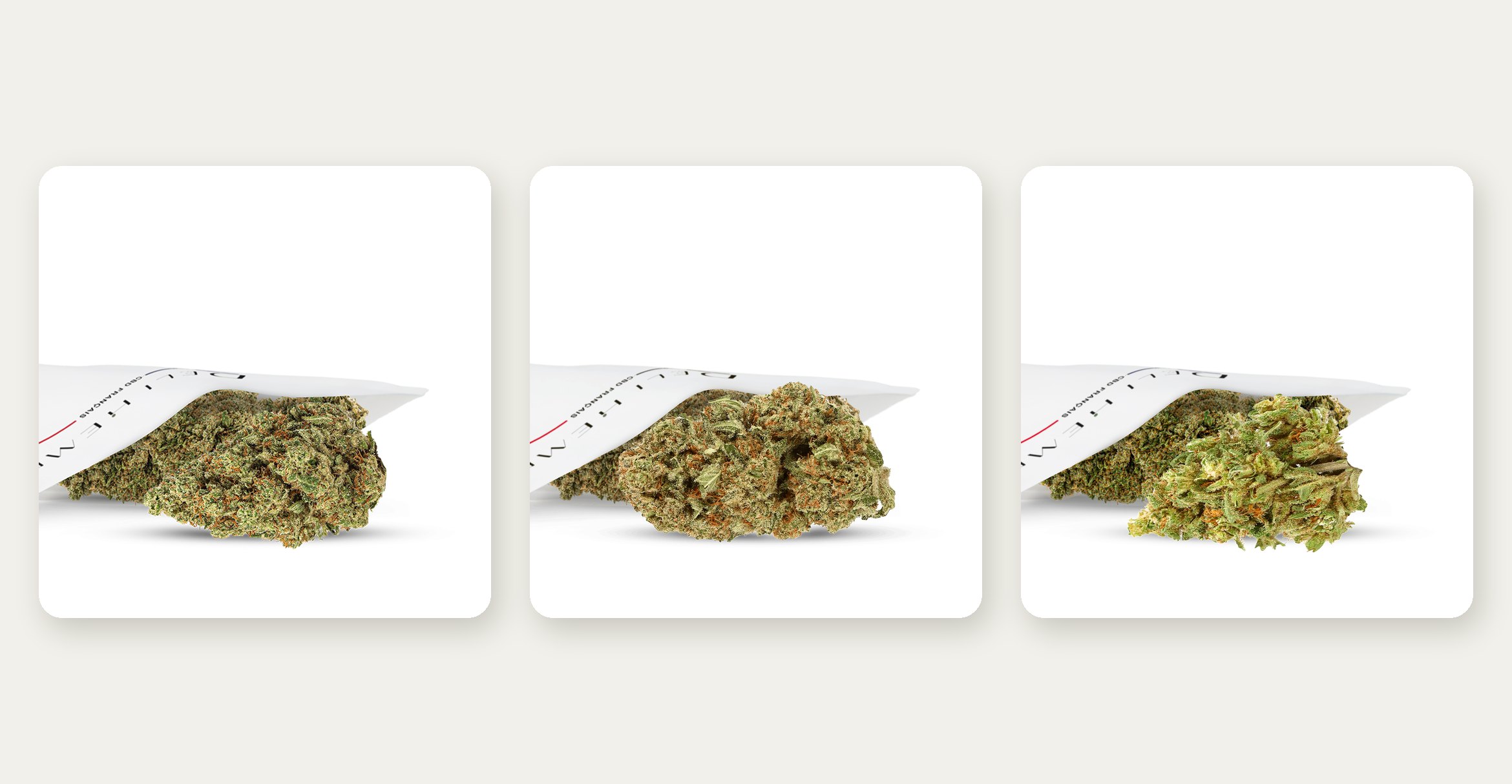
Sativa and indica originally described two types of plant: sativa, tall and slender with narrow leaves, and indica, short and stocky with broad leaves. Almost every flower sold today is a hybrid of these lines, and the label tells you nothing reliable about the smell or composition of a batch. For a retailer, it is a conversation starter, not a selling point.
Is Amnesia an indica or a sativa?
Amnesia is a sativa-dominant hybrid. It belongs to the Haze family, lines descended from strains from warm regions (South-East Asia, Central America) and known for their citrus and spice notes. In the Deli Hemp catalogue, Amnesia 2.0 Hydro is the textbook example: a lemony, green profile and a tall, slender plant.
"Dominant" is the key word. Amnesia is not a pure sativa: it is a cross whose visible traits lean towards the sativa side. Most modern strains work this way.
Where do the terms sativa and indica come from?
From the 18th century. The Swedish botanist Carl Linnaeus described Cannabis sativa in 1753, based on hemp grown in Europe. In 1785, the French naturalist Jean-Baptiste de Lamarck described Cannabis indica from plants brought from India, which were smaller and more resinous.
Two centuries later, growers borrowed these words to classify their strains. Along the way they added promises of effects ("indica relaxes, sativa energises") that have never stood up to lab testing. A study published in 2015 in the journal PLOS ONE (Sawler et al.) compared the DNA of dozens of strains: the sativa or indica name on the label matched their actual genetic ancestry only in part.
French regulations recognise only one species, Cannabis sativa L., and only varieties listed in the EU catalogue with less than 0.3% delta-9-THC are authorised. On a CBD flower, sativa or indica is therefore a commercial label inherited from recreational cannabis. Our flowers comply with French law (delta-9-THC ≤ 0.3%), but rules on hemp flower vary from country to country, and in the UK its status remains contested, so check what you may resell where you trade before ordering.
How do sativa, indica and hybrid plants differ?
The differences are visible on the growing plant, much less so on the dried flower. The table sums up the traditional tendencies.
| Sativa-dominant | Indica-dominant | Balanced hybrid | |
|---|---|---|---|
| Plant | Tall, widely spaced branches | Compact, bushy | Variable |
| Leaves | Long, narrow leaflets | Short, broad leaflets | In between |
| Flowering | Longer | Shorter | Depends on the parents |
| Aroma families often associated | Citrus, spice, incense (Haze) | Earth, wood, leather (Kush) | Any profile |
| Examples in our catalogue | Amnesia 2.0 Hydro | Bubba Kush, Critical Kush | Lemon OG |
These are tendencies, not rules. Even the names can mislead: Liberty Haze Hydro carries the Haze name, but it descends from a G13 × Chemdawg cross rather than from the classic Hazes.
Can these terms predict how a CBD flower smells or what it does?
Neither. For smell, the genetic family gives a tendency (a Kush smells of earth more often than a Haze), but the terpene blend of the batch has the final say. As for effects, a CBD flower should not be sold with any promise in the first place: saying "indica, so it's relaxing" is a health claim.
What really lets you compare two flowers:
- the batch analysis (CBD content, delta-9-THC below 0.3%)
- the aroma, described in three words
- the growing method (outdoor, indoor, hydroponic) and bud size
- how fresh the batch is and its condition on arrival
How should you use sativa and indica in your shop?
As a piece of vocabulary, not as a way to organise the shelf. Many customers come in with these terms in mind. Answer them, then steer the conversation back to what can be checked: aroma and growing method.
A shelf arranged by aroma family works better than a "sativa / indica" split. In practice, that means a lemony Haze (Amnesia 2.0), an earthy Kush (Bubba Kush Big Bud Outdoor), a hybrid with citrus and earthy notes (Lemon OG Indoor) and a fruity flower. Customers compare genuinely different aromas, and you avoid stocking three interchangeable lines.
On the label, you can state "sativa-dominant hybrid" if the information comes from the breeder. Always add the aroma notes and growing method alongside it. We explain how to describe aromas in our article on CBD flower terpenes.
See indoor CBD flowers · See hydroponic CBD flowers
Frequently asked questions
Is Amnesia an indica or a sativa?
Amnesia is a sativa-dominant hybrid from the Haze family. It is associated with a tall plant and lemony, green notes. Like all modern strains, it is a cross: the name describes a tendency, not a pure line.
Is an indica CBD flower more relaxing than a sativa?
Nothing supports that claim, and a retailer should not make it. Genetic studies show that sativa and indica labels match the real make-up of strains poorly. Compare flowers on their batch analysis, aroma and growing method.
What is a hybrid CBD flower?
It is a flower from a strain bred by crossing several lines, which covers almost every strain sold today. Labels sometimes add "sativa-dominant" or "indica-dominant", depending on which traits win out in the plant.