
 Français
 Español
 Deutsch
 Nederlands

 CBD
 CBN
 HEADSHOP
 Adaptogenic mushrooms

Growing hemp for yield: variety, soil, sowing density and fertiliser
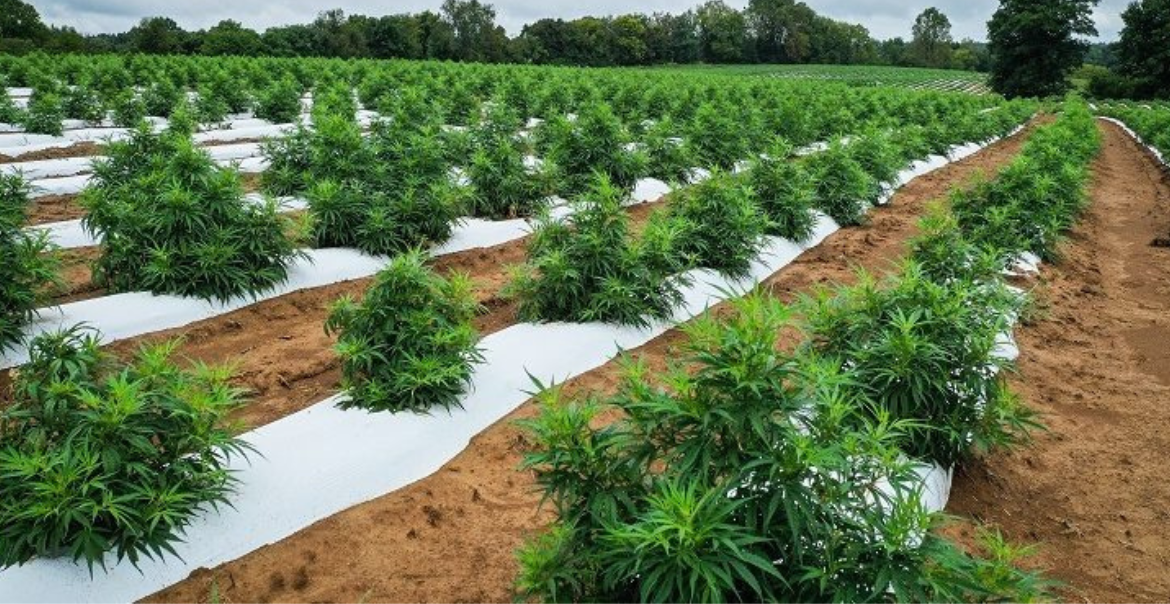
Four decisions shape the yield of a hemp crop more than any other: the variety you sow, how you prepare the soil, the sowing density and the way you feed the plants. Get those right and hemp, a hardy plant that needs few treatments, rewards you with a strong harvest of straw, seed or flowers. This guide takes each lever in turn, with the figures growers work with.
Hemp growing has seen renewed interest in recent years. The plant has been used for thousands of years, and demand for its fibre, its seed and its extracts, CBD among them, keeps rising. For a producer, mastering the basics is the surest way to make the most of that demand.
1. Choose the right hemp variety
Variety is the first decision and one of the most important. Climate, the yield you are after and disease resistance all come into it.
For growers who want to produce CBD hemp, Deli Hemp also supplies certified CBD seeds. They come from varieties that comply with French law (delta-9-THC ≤ 0.3%), such as Strawberry Gorilla and Purple Punch, and each batch is supplied with the certificates that document its compliance and traceability. Our range also includes autoflowering seeds.
Rules on growing hemp and on selling its flowers, resins and other products vary from one country to another and can be much stricter than in France. In the UK, the status of hemp flower is still contested. Check what is allowed where you farm or trade before ordering.
Varieties suited to your climate
Hemp adapts to a wide range of climates and grows at temperatures from 7 to 30°C. To get the best results, though, choose a variety suited to your local conditions.
In cooler regions such as northern Europe, fast-growing, early-flowering varieties are the safer choice. They are harvested before the autumn rains and the mould that comes with them. In the warmer south of Europe, you have more freedom, with a potentially longer growing season.
Yield potential
Modern varieties have been bred for high yields, whether you grow for fibre or for seed.
- For straw only (crops that are not threshed), late varieties give the most biomass, because their growing period is longer.
- For a mixed crop of seed and straw (threshed crops), early or mid-early varieties strike the best balance between the two.
Yields vary a great deal with growing conditions. In ideal conditions, some varieties produce up to 8 tonnes per hectare per year, roughly twice the yield of flax.
Disease resistance
Hemp is known to resist most viral, bacterial and fungal diseases. That means far fewer crop protection products, which saves money and spares the environment.
The varieties offered to farmers today are so-called “population” varieties. They are hardy and varied in their resistance to pathogens, so when a disease does break out, usually only a small share of the plants is affected and overall productivity holds up.
Some threats still deserve attention. Broomrape, a parasitic plant, can cause serious damage in certain regions, and breeders are working on varieties that tolerate or resist it.
2. Prepare the soil properly
Soil preparation sets up the whole season. Hemp needs good conditions from the start to grow away quickly.
Deep ploughing
Hemp has a taproot that needs deep, well-aerated soil. On heavy ground such as clay, winter ploughing is recommended so that the soil is fine and crumbly by sowing time. On light soils, spring ploughing can be enough.
Avoid compaction, which holds back root growth. Combining implements cuts down the number of passes over the field, and twin wheels or low-pressure tyres help protect the soil structure.
Where the structure is already good down to 30 cm, shallow cultivation to 7 or 8 cm can be enough. Direct drilling is even possible in some settings, although it takes experience.
A fine seedbed
A fine seedbed is essential for good emergence. After ploughing, work the soil again with a tined implement. This loosens the soil for rooting, warms the seedbed and stops it drying out, which gives seedlings ideal conditions.
A stale seedbed is worth considering on fields known to be weedy. You prepare the ground as if to sow, wait for the weeds to come up, then destroy them, preferably mechanically. Weed pressure drops considerably.
The seedbed must be fine enough for good contact between seed and soil. On soils prone to capping, though, avoid over-working it, or a crust may form on the surface.
Managing crop residues
Hemp fits well into a rotation and is regarded as an excellent preceding crop for cereals, on a par with lucerne or peas.
If the straw from the previous crop has not been harvested, it can be rolled or left on the ground over winter to break down. This adds organic matter and improves soil structure.
Hemp itself leaves a loose, airy soil behind it after harvest. The next crop can often be sown without ploughing, a real saving in time and cost.
3. Adjust your sowing density
Sowing density has a direct effect on the shape of the plants and on the quality of the harvest.
The right density
The right density depends on what you are growing for and on your conditions. Growers usually aim for 200 to 250 established plants per square metre. That corresponds to a seed rate of 40 to 50 kg/ha, depending on the thousand-grain weight of the variety.
Density has relatively little effect on straw or seed yield, but it changes the stand a great deal. Higher densities give thinner, shorter stems; lower densities give sturdier plants.
| Crop type | Recommended seed rate |
|---|---|
| Not threshed (straw only) | About 40 kg/ha |
| Threshed (seed and straw) | About 30 kg/ha |
Row spacing
Hemp is usually drilled in rows with a standard cereal drill fitted with coulters. Row spacing can range from 9 to 17 cm, but the closer the rows, the better: the crop covers the ground faster and weeds have less room.
Sowing must be even. An irregular stand means uneven competition between plants and drags down the yield of the whole field.
Sowing depth
Sow at 2 to 3 cm, no deeper. At that depth the seed finds the moisture it needs to germinate and the seedling emerges easily.
Too shallow, and the seed risks drying out and attracts birds, which are fond of it. Too deep, and fewer plants come up, especially on silty soils prone to capping. Keep the depth as even as possible across the field, which means a well-adjusted drill in good condition.
Rolling after sowing is strongly recommended. It improves seed-to-soil contact and germination, levels the ground and presses down stones that could get in the way at harvest.
4. Manage fertilisation
Hemp's nutrient needs are moderate compared with other crops, but a balanced approach matched to the plant still makes a clear difference to yield.
What does hemp need?
For a yield of 8 tonnes of straw and 10 quintals of seed per hectare, estimated needs are as follows.
| Nutrient | Estimated need (units per hectare) |
|---|---|
| Nitrogen | About 120 |
| Phosphorus | 100 |
| Potash | 300 |
| Calcium | 320 |
Hemp is particularly demanding in potash, at around 300 units per hectare, while the crop removes about 150. Calcium matters almost as much, with comparable needs.
Splitting nitrogen applications
Nitrogen fertiliser tops up what the soil already supplies. Hemp takes up most of its nitrogen between the three-leaf-pair stage (about 50 cm) and the end of flowering. Usually the whole dose goes on at sowing, but splitting it can raise seed yield.
A common approach is to apply two thirds of the dose at sowing and one third at the 50 cm stage (5 to 6 leaf pairs). The second application should go on dry foliage, in solid form only.
Using organic fertilisers
Organic fertilisers, made from plant or animal matter such as manure, compost or seaweed, supply plenty of macronutrients, micronutrients and enzymes.
They release nutrients gradually, which reduces the risk of over-feeding and scorching, two common problems with chemical fertilisers. They also improve soil structure and encourage useful microbial life. Apply them in small, gradual doses and adjust the rate to the variety and to your conditions.
Frequently asked questions
What is the ideal temperature for growing hemp?
Hemp grows at temperatures between 7 and 30°C. In cooler regions, choose early-flowering varieties so you can harvest before the autumn rains.
Is hemp a good crop to grow before cereals?
Yes. Hemp is regarded as an excellent preceding crop for cereals, on a par with lucerne or peas. It leaves a loose, airy soil, and the next crop can often be sown without ploughing.


