
 Français
 Español
 Deutsch
 Nederlands

 CBD
 CBN
 HEADSHOP
 Adaptogenic mushrooms

CBD vs THC: how the two cannabinoids differ, and what it means for a CBD shop
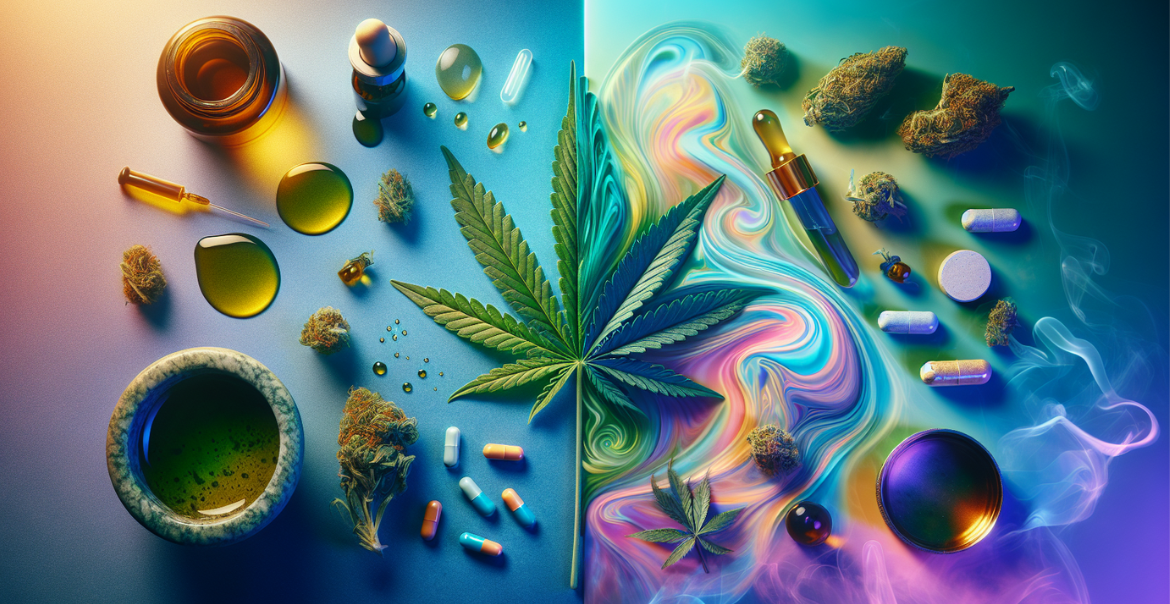
CBD and THC are the two best-known cannabinoids in the cannabis plant, and the difference between them decides what a shop can sell. THC is psychoactive and classified as a narcotic in France. CBD is not psychoactive and, in France, can be sold under conditions. Here is how the two compare, from how they act in the body to their legal status, with what it means for a retailer.
What are CBD and THC?
CBD: a cannabinoid without psychoactive effects
CBD (cannabidiol) occurs naturally in hemp and cannabis. Unlike THC, it does not alter the mind, does not cause euphoria and does not stop people going about their day normally. It interacts with the endocannabinoid system, the network of receptors the body uses to regulate a range of functions.
CBD is the subject of a great deal of research. Medical uses, however, are a matter for doctors and prescription medicines. CBD products sold in shops are not medicines, and neither their labels nor your sales talk should make health claims.
THC: the psychoactive cannabinoid
THC is known above all for its psychoactive effect, the “high” that recreational users look for. It binds to the CB1 receptors in the brain and changes perception, mood, memory and coordination.
Because of those effects, THC is strictly regulated in many countries. Where it is used medically, it is in prescription medicines only.
How do CBD and THC act on the body?
The endocannabinoid system is a set of receptors found throughout the body, including the brain, the organs and the immune system. It is involved in regulating functions such as appetite, sleep and the response to stress. CBD and THC both act on it, but in different ways.
CBD and the endocannabinoid system
CBD does not bind directly to the CB1 and CB2 receptors the way THC does. Instead, it slightly changes how those receptors respond to other cannabinoids, and it is thought to influence the body's own compounds such as anandamide. It does not cause euphoria, and it is not considered addictive.
THC and the endocannabinoid system
THC binds directly to the CB1 receptors in the brain, which produces its psychoactive effects. Alongside the euphoria come changes in perception, mood and motor coordination. THC can also have unwanted effects:
- anxiety or paranoia in some people, especially at high doses;
- impaired short-term memory;
- a risk of long-term dependence for some users.
Absorption and elimination
CBD has a fairly long elimination half-life, so it stays in the body for several hours after use. THC has a shorter half-life, but it tends to build up in fatty tissue, which can prolong its presence in regular users.
THC and mental health
Unlike CBD, THC can present risks for mental health, particularly for young people. Regular use, especially at high doses, is associated with a higher risk of anxiety and paranoia, depression and, in some cases, psychotic disorders, notably in young people who start early and use heavily.
What a CBD shop can stock
For a retailer, the practical difference is simple: you sell CBD products that comply with French law (delta-9-THC ≤ 0.3%), described by their aroma, origin and cannabinoid content, never by an effect on health. At Deli Hemp, our best-selling lines include flowers such as Red Velvet in our hydroponic range and Purple Dream among our greenhouse-grown flowers, resins such as Green Crack, Cali Plate and Lebanese Red, CBD oils in several concentrations, and CBD capsules. All are made from hemp grown in Europe, which ensures quality and traceability.
Rules on hemp flower, resin and other hemp products vary between countries and can be much stricter than in France. In the UK, the status of hemp flower is still contested, so check what you may resell before you order.
The legal framework for CBD in France and in Europe
Rules and access
In France, the sale and use of non-medical cannabidiol (CBD) are authorised. CBD is not considered a narcotic or a psychotropic substance, but the rules on CBD and hemp products remain complex and keep changing.
A French order of 30 December 2021 governs the growing of hemp, the industrial production of hemp extracts and the sale of products containing them. To be exempt from the general ban on narcotics, CBD products must come from plant varieties listed in the official catalogue and contain no more than 0.3% THC.
In December 2022, the Conseil d'État, France's highest administrative court, struck down the provision that banned the sale of hemp flowers and leaves without narcotic properties. That decision opened the way to selling them, provided they respect the 0.3% THC threshold.
At European level, the Court of Justice of the European Union ruled in November 2020 that CBD could not be classed as a narcotic, whichever part of the plant it was extracted from. France had to bring its rules into line with EU law as a result.
One more recent change applies to ingestible products: since 15 May 2026, the French authorities (DGAL, the directorate-general for food) have banned foodstuffs containing CBD, because CBD has not been authorised as a novel food in the EU.
THC and medical cannabis
Unlike CBD, THC remains classified as a narcotic in France. Its production, sale and use are prohibited, except within the medical cannabis trial launched in 2021.
That trial was originally due to end in March 2023. When this article was first written, in October 2024, it had been extended until a cannabis-based medicine was approved and available, and at the latest until 31 December 2024. Its aim was to assess whether medical cannabis could be made available in France for conditions such as epilepsy, multiple sclerosis and palliative care. Check the current position before relying on it.
Frequently asked questions
What is the main difference between CBD and THC?
THC is psychoactive: it binds directly to the CB1 receptors in the brain and causes the “high”. CBD does not, and it does not cause euphoria. In France, THC is classified as a narcotic, while CBD can be sold under conditions.
Can a CBD product contain THC?
Yes, in small amounts. In France, products must comply with French law (delta-9-THC ≤ 0.3%). THC-free products also exist. Always check the batch lab report for the exact content.


